
3. Dissolution and mixing
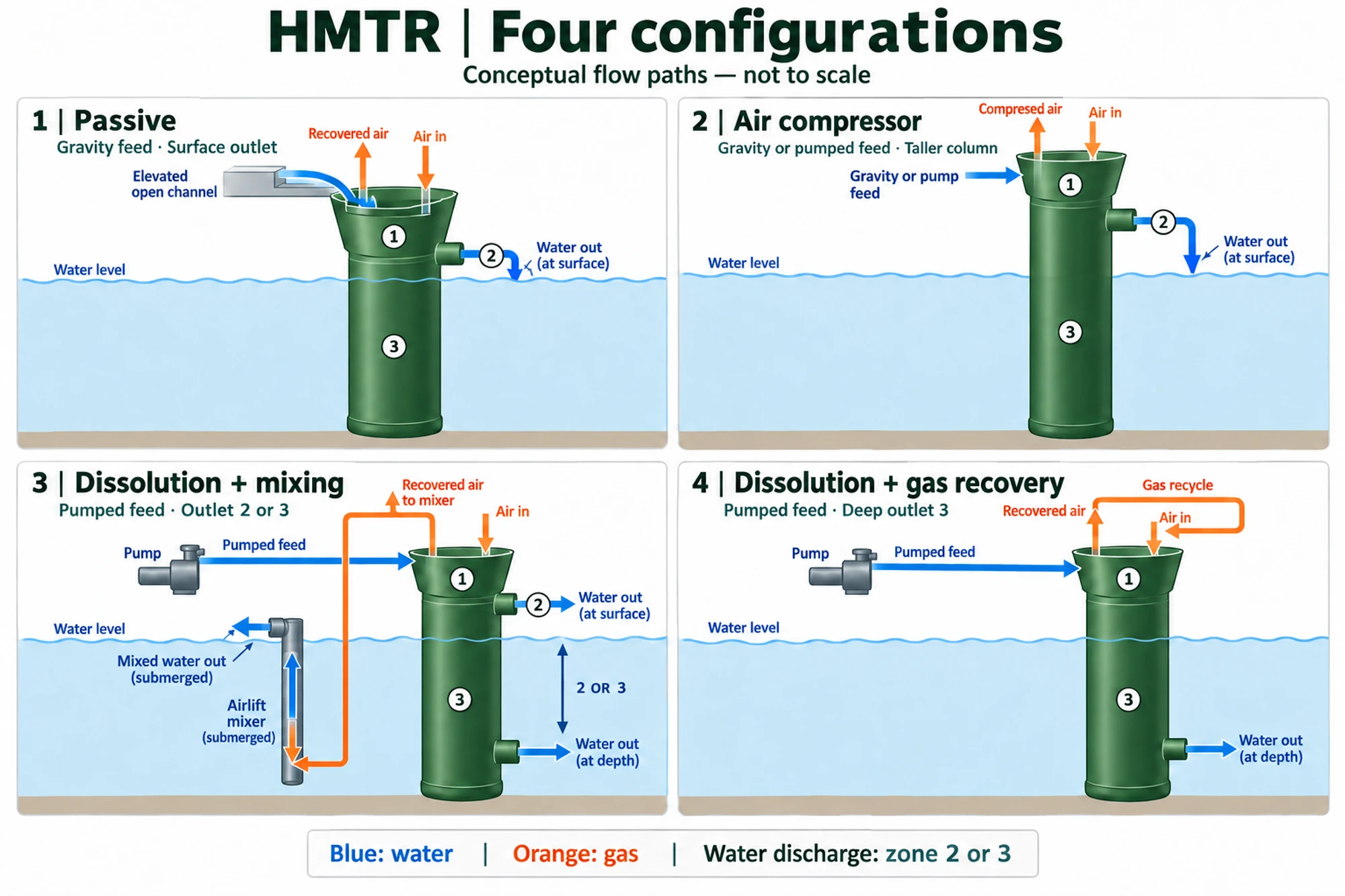
Water is pumped into HMTR. After gas–liquid contact, the separated air can be used for circulation and mixing with airlift equipment.
Water & wastewater
Koohub HMTR is designed for gas dissolution in water and wastewater, microbubble generation and recovery of undissolved gas. From aeration and oxygen transfer to the dissolution of process gases such as ozone and chlorine, the device configuration is selected for the gas and the process objective.
Gas and liquid are brought into contact under the pressure of the water column. In the recovery configuration, undissolved gas is separated and returned to the injection circuit for reuse. Body materials, flow paths, injection equipment and controls are selected to suit each project.
Water is pumped into HMTR. After gas–liquid contact, the separated air can be used for circulation and mixing with airlift equipment.
Unused gas is separated and returned to the injection circuit. Components and the return path are selected for the gas and liquid conditions.
Performance commitments apply to the specified device outputs. Final treatment quality and process management depend on the facility’s process design and operation.
Transfer oxygen into water through effective air–liquid contact in HMTR. Separated air can also support circulation and mixing with airlift equipment, subject to tank conditions.
Bring gas and liquid into contact under water-column pressure, with flow paths and configuration selected for the gas and liquid properties.
Generate and introduce fine bubbles into the liquid stream, using a configuration suited to the application.
Dissolve oxidising gases such as ozone in water, with undissolved-gas recovery available in a suitable configuration. Dose, contact time and the process combination are determined by water quality and treatment objectives.
Transfer and dissolve gases such as chlorine using compatible materials and suitable injection and recovery arrangements. Gas and liquid delivery conditions are specified according to feed properties and process requirements.
Separate residual gas and return it to the injection circuit in the recovery configuration, following assessment of gas composition and operating conditions.
Deep microbubble injection for activated-sludge applications remains part of Koohub’s ongoing development. The development page presents the results and limitations of completed trials.
Explore the development journey →Air-powered transfer at low head, with dimensions and air injection selected for the fluid, solids content and lift height.
Circulate and mix tank contents using a suitable air supply, with installation depth and outlet arrangement matched to tank geometry.
Recovered gas is not necessarily air. Its use in pneumatic equipment depends on gas composition and equipment compatibility.